
Rosy
For Commercial Greenhouse Producers

Peat-based media has a structural lifespan. You are already past it.

A permanent biochar amendment that integrates at 5–20% into your existing base media, prevents structural collapse, and reduces the shrink and labor cost that follows.

Peat degrades in 6–18 months. In a commercial greenhouse on a production timeline, that means the media you spec in January is not the same media running in September. Anaerobic pockets form. Roots suffocate. Shrink climbs. Labor to manage it climbs with it.

Rosy's RS-Core establishes a permanent biochar skeleton at the mix stage. It does not degrade. The structure you start with is the structure you finish with, across the full production cycle and the next one.

The Cost of Shrink

What structural media failure costs per tray.

6–18 mo
Structural lifespan of peat-based media
1,000+ yrs
Stability of biochar (recalcitrant)
5–20%
Integration rate, no base media change
35–45%+
AFP in the amended root zone

Shrink in greenhouse production is rarely attributed to media. It shows up as root disease, uneven canopy, inconsistent wet/dry cycles, and plants that simply do not finish. The root cause, literally, is often a root zone that has gone anaerobic as peat structure collapsed under irrigation pressure.

RS-Core integrates at 5–20% by volume into your existing peat or coir-based mix. You do not change your base media spec. You do not change your irrigation program. You add a structural layer that does not decay, and you measure what changes in your shrink rate, your labor call, and your tray consistency over one full production cycle.

Integration

This is an amendment, not a media swap.

We are not asking you to evaluate a new base media. We are asking you to integrate RS-Core or RS-Core Bio at 10–20% into your current mix and observe the structural difference over one cycle. Volumetric conversion: approximately 1.35 to 2.7 cubic feet of RS-Core per cubic yard of base media, depending on crop intensity and current substrate quality.

10%
Inclusion

~1.35 cu ft RS-Core per cu yd base media

15%
Inclusion

~2.0 cu ft RS-Core per cu yd base media

20%
Inclusion

~2.7 cu ft RS-Core per cu yd base media

Product Detail

RS-Core & RS-Core Bio

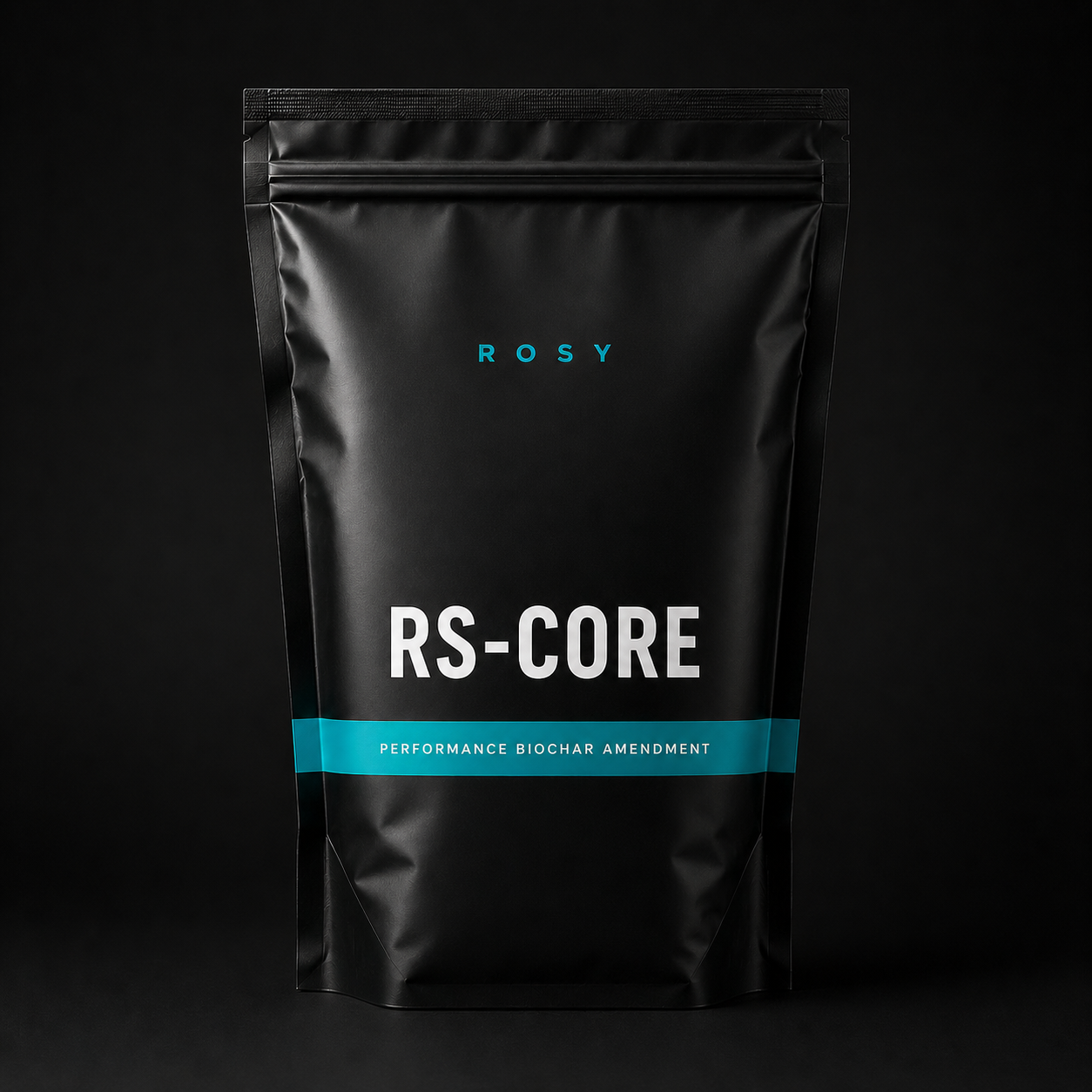
RS-Core biochar amendment bag

RS-Core

Charged with Structure

Performance biochar and OMRI-listed compost. Designed for 10–20% integration into peat or coir-based production media.

Prevents compaction, increases AFP, establishes a biochar skeleton that maintains structure for the full cycle.

AFP: 35–45%+ (vs. 5–15% in compost) · Stability: Permanent (1,000+ years)

Best for: commercial greenhouse production, large-scale nursery containers.

Bulk only (~20 yd minimum)
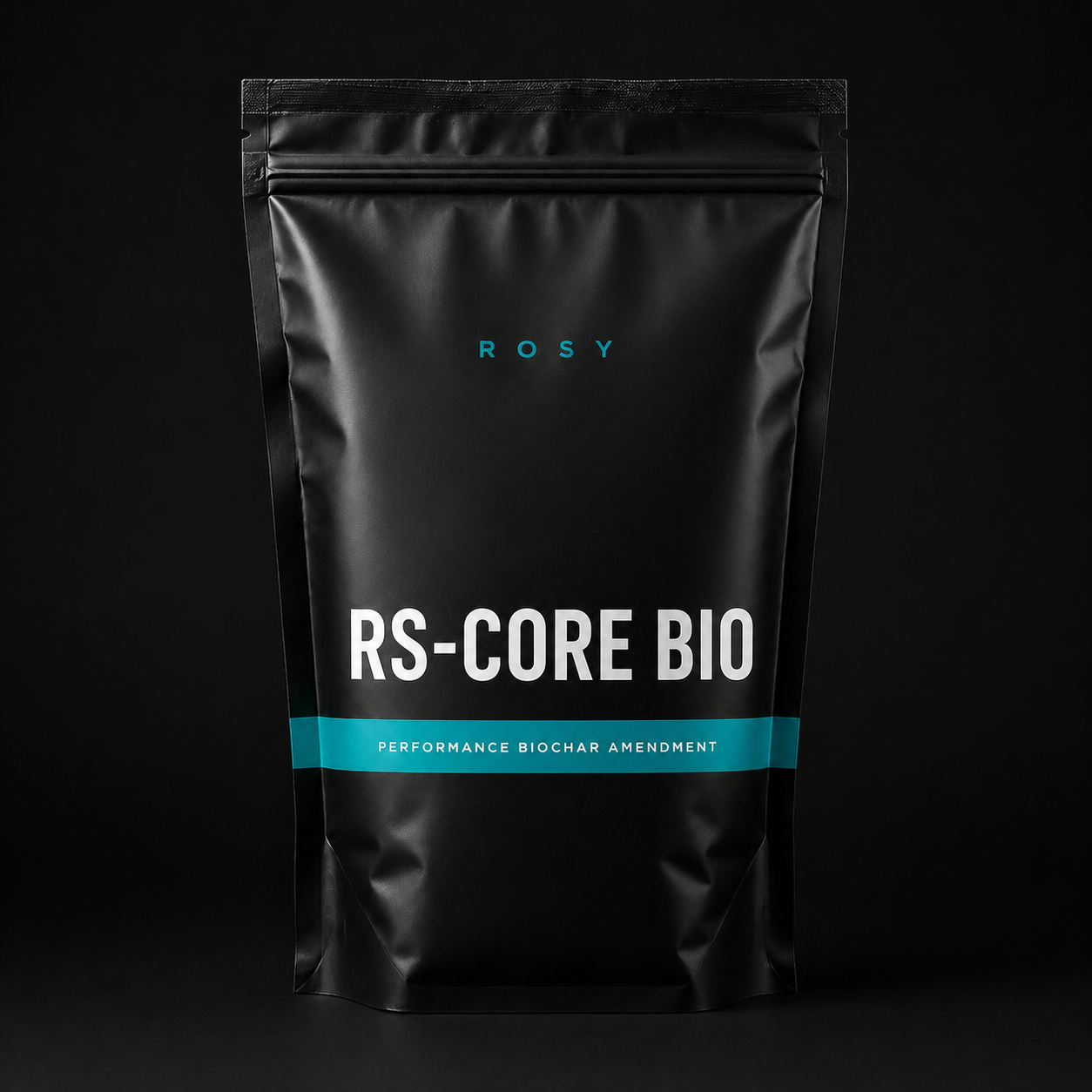
RS-Core Bio biochar amendment bag

RS-Core Bio

Charged with Life

Performance biochar with premium worm castings. Adds biological activity and microbial diversity.

Same structural benefits as RS-Core with an active biological component suited for propagation and transplant environments.

Best for: propagation stages, biologically active growing systems, operations running living media programs.

Bulk only (~20 yd minimum)
Nitrogen Note

On nitrogen immobilization: the short answer.

Raw biochar can pull nitrogen from your media during its decomposition process. That is a real concern and a common reason growers avoid biochar entirely.

Every Rosy amendment contains compost and/or worm castings as the primary inoculant. These stabilize the C:N ratio of the biochar before it ships, eliminating nitrogen drawdown at the grower's end. No adjustment to your fertility program required at integration.

Start with one bay, one tray configuration, one production run.

We do not need your full operation to test this. One defined section of your greenhouse against your standard media. Same crop, same inputs, same program. We look at specific metrics: shrink rate, root development, and wet/dry cycle consistency.