Rosy
For Outdoor and Soil Cannabis Growers

Media that breaks down mid-cycle is not a substrate problem. It's a margin problem.

Biochar amendments designed for operations mixing their own media, running raised beds, or managing large containers through a full outdoor cycle.

Peat-heavy media degrades structurally across an outdoor cycle. You get compaction, anaerobic root zones, pH drift in weeks 8–10, and nutrient inconsistency that shows in your batch. Rosy's biochar amendment integrates into your existing protocol, it does not replace it.

This page is for soil and outdoor growers. If you are running DWC, rockwool, or hydro-only, Rosy is not the right fit.
The Problem

What happens when peat goes anaerobic at week 9.

Peat-based media is labile. It breaks down. Over a long outdoor cycle, especially under heavy irrigation, it compacts, loses air-filled porosity, and creates anaerobic pockets in the root zone. In those conditions, beneficial microbiology cannot survive, root pathogens like Pythium thrive, and you start seeing pH instability from fertilizer salt accumulation.

By late flower, the media you started with is not the media your plant is finishing in. The structural difference between week 4 and week 12 is measurable. Biochar does not break down. One integration at the mix stage creates a permanent porous skeleton that maintains gas exchange, microbial habitat, and pH stability for the full cycle and beyond.

400 m²/g internal surface area·35–45% AFP (vs. 5–15% standard)·Permanent structure
Pre-empting the Objection

On nitrogen immobilization: the short answer.

Raw biochar can pull nitrogen from your media during its decomposition process. That is a real concern and a common reason growers avoid biochar entirely.

Every Rosy amendment contains compost and/or worm castings as the primary inoculant. These stabilize the C:N ratio of the biochar before it ships, eliminating nitrogen drawdown at the grower's end. No adjustment to your fertility program required at integration. RS-Charge and RS-Charge Pro also contain Charkashi, a biochar-bokashi ferment that accelerates microbial load and activity beyond what compost alone provides.

Product Detail — Cannabis

Four amendments. Pick by stage.

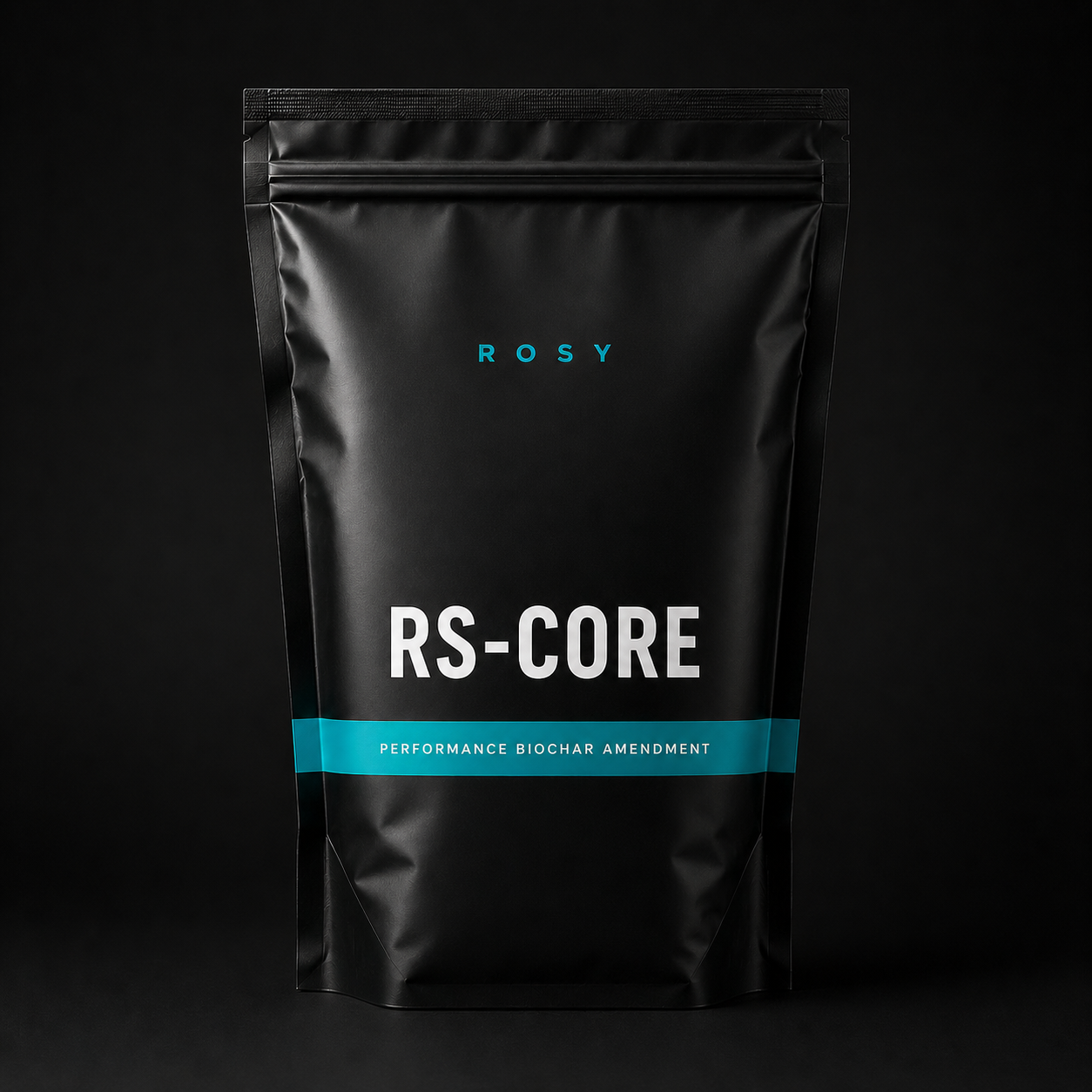
RS-Core biochar amendment bag

RS-Core

Charged with Structure

Performance biochar and OMRI-listed compost. 10–20% integration rate into your base mix.

Prevents compaction, increases AFP, establishes a permanent biochar skeleton in peat or coir-based media.

Best for: operations mixing media at scale. Raised bed, large container, greenhouse soil.

Bulk only (~20–40 yd minimum)
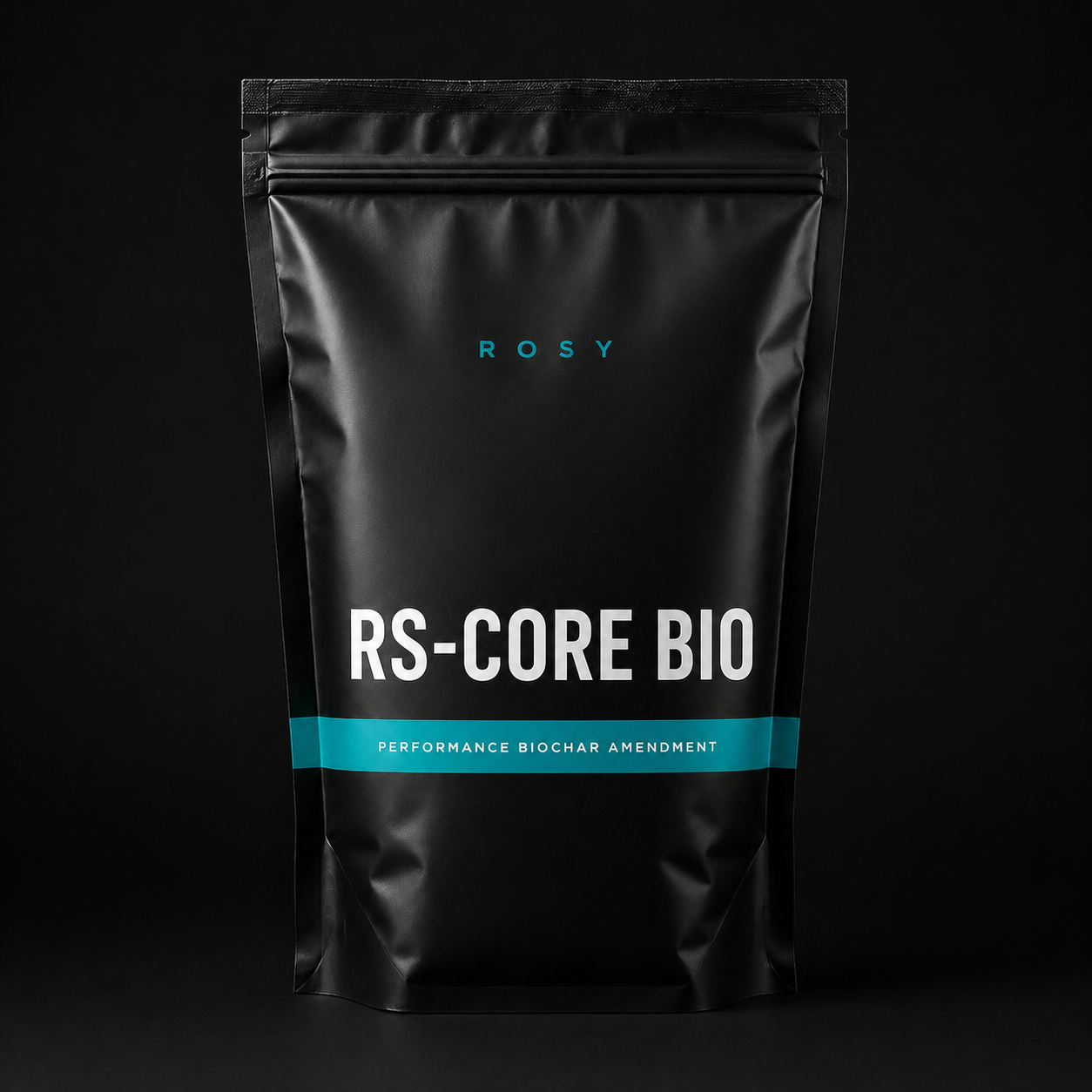
RS-Core Bio biochar amendment bag

RS-Core Bio

Charged with Life

Performance biochar with premium worm castings. Adds biological activity and microbial diversity without sacrificing structural integrity.

Best for: propagation stages, transplant environments, living soil operations.

Bulk only (~20–40 yd minimum)
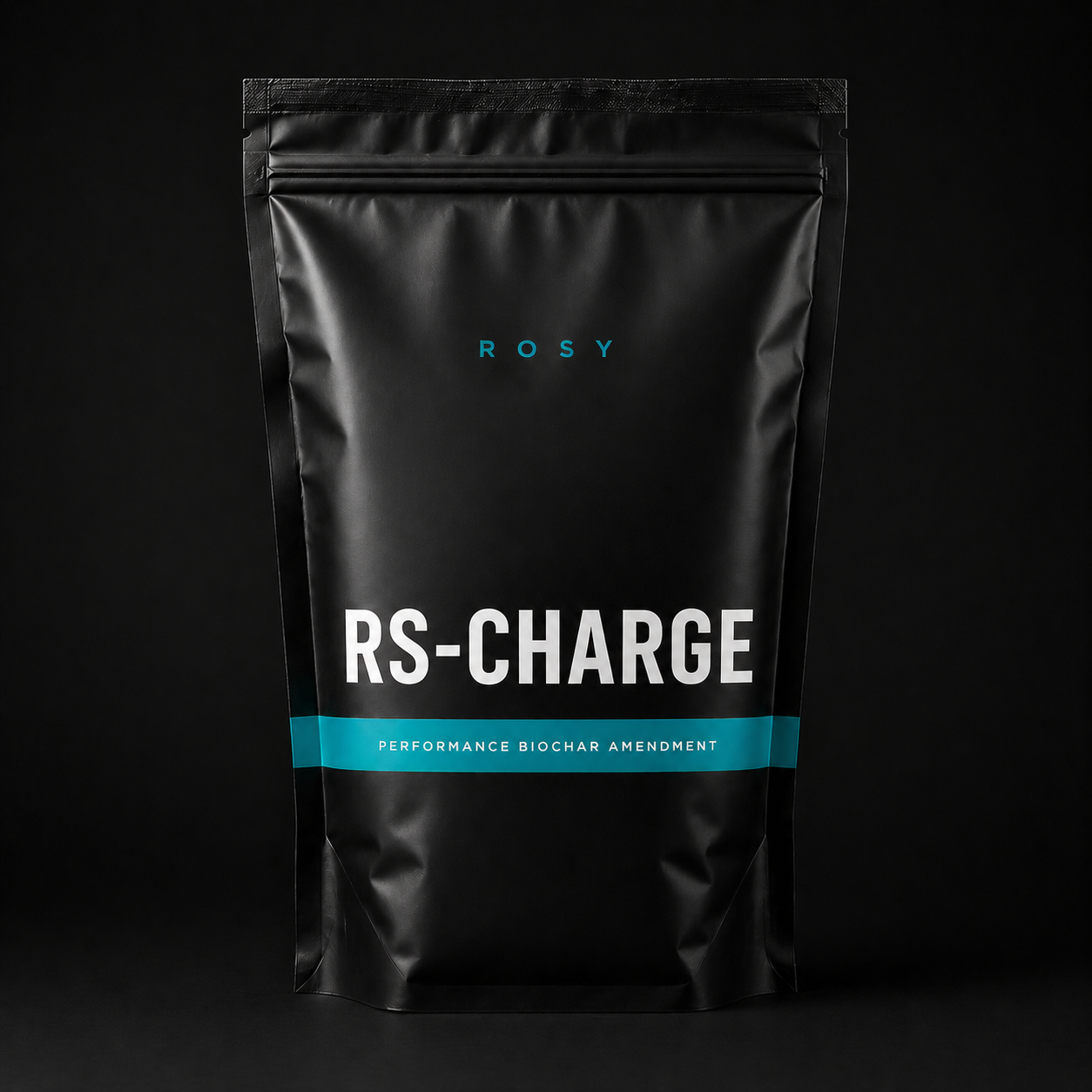
RS-Charge biochar amendment bag

RS-Charge

Charged for Performance

Performance biochar pre-charged with a stabilized mineral and organic nutrient profile.

Reduces leaching, buffers pH, supports consistent nutrient availability.

Best for: vegetative growth, high-value input cost reduction.

2 yd Super Sack · Bulk
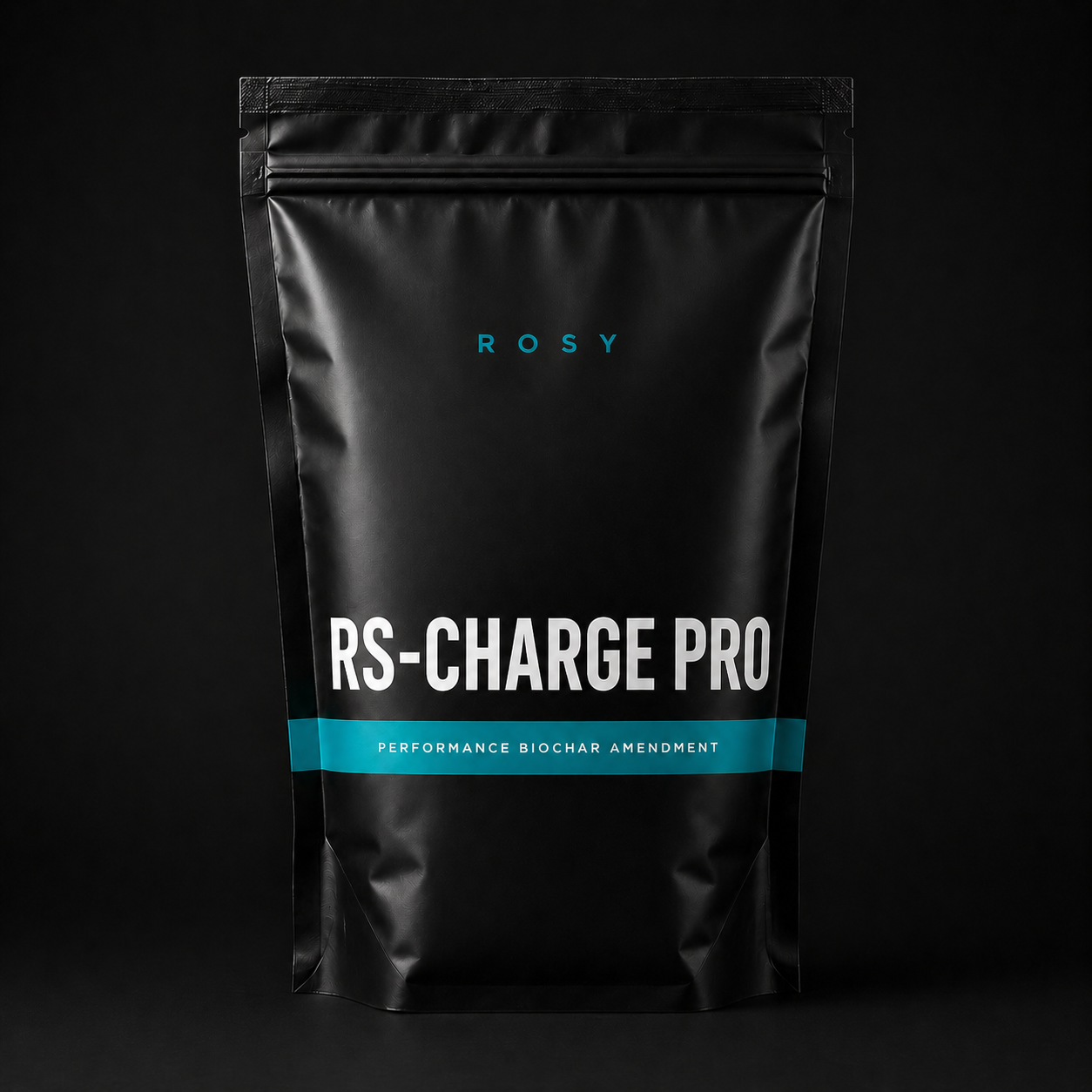
RS-Charge Pro biochar amendment bag

RS-Charge Pro

Charged for Peak Output

Performance biochar charged with Charkashi, kelp, alfalfa, and seabird guano (3-2-1 NPK).

Maximum biological activity, slow-release nutrient reserve. Designed for the back half of a cycle.

Best for: flowering cycles, finishing stages, premium craft production.

2 yd Super Sack · Bulk
Trial Structure

How a cannabis trial works.

Start with a 5–20% amendment inclusion into one defined section of your current media. One bed, one row, one bay, alongside your standard mix. Your program stays the same. We follow up within 3 days of delivery and check in at 30 days with specific observations to compare.

For operations ready to move off peat, coco, or coco-perlite blends entirely, RS1 and RS3 are direct replacements built on the same biochar foundation.

Technical Reference

For the head grower.

One bed. One row. One cycle.

See the structural difference at finish, then we talk.